How to choose a virtual reality game development company
A VR project fails when headset support, interaction design, and performance requirements are treated as additions to a conventional game. A headset tracks the player, but it does not solve comfort, reach, locomotion, calibration, or frame-timing problems. Choosing a virtual reality game development company therefore requires more than checking whether a studio can make a headset game. You need evidence that the team can design around physical movement and test the result on the hardware the intended audience will use.
The right partner should be able to explain which device families the game will support, how it will handle room-scale boundaries, and how it will preserve frame timing under realistic load. It should also clarify who owns source files, art assets, SDK components, and any work created outside the engine. A small team can still deliver a focused VR experience, but only if its responsibilities and production constraints are clear. This guide provides a practical framework for comparing agencies, internal teams, and independent specialists before you commit to a prototype or full production contract.
What a capable VR development partner should understand
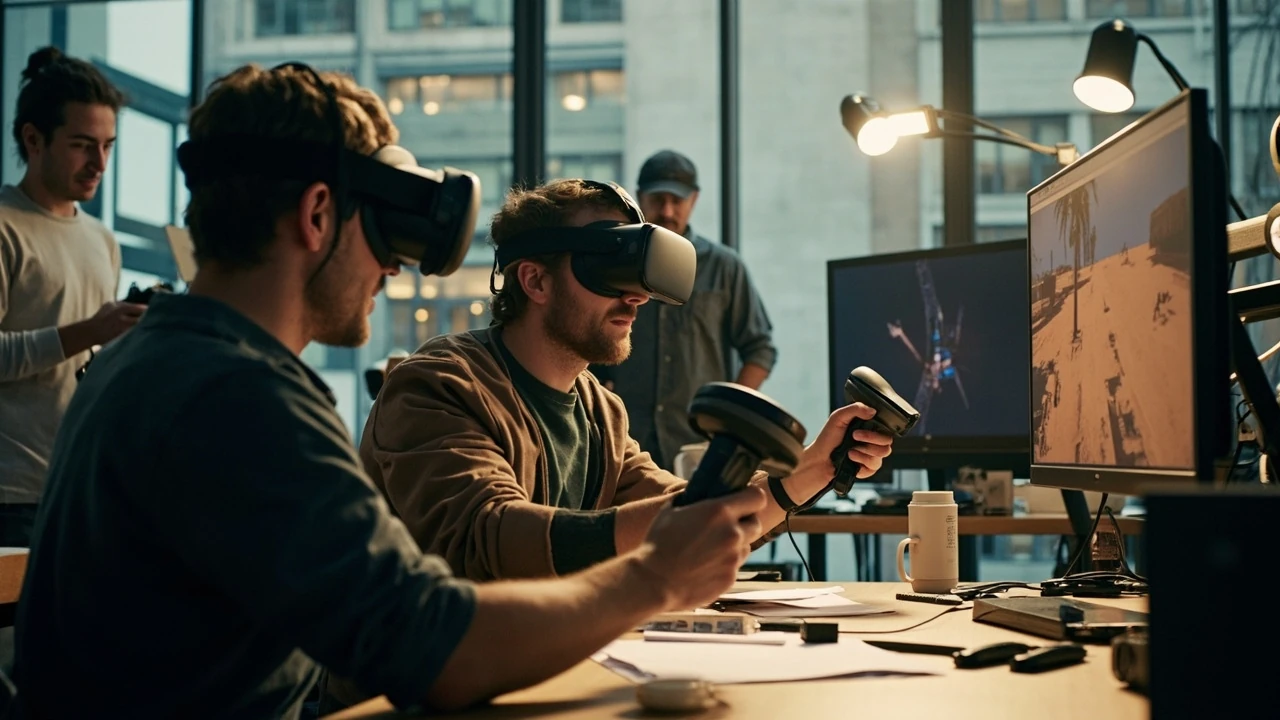
A capable partner starts with the player’s physical relationship to the experience. The headset, input devices, tracking volume, room configuration, play space, and session length all shape the design. A scene that works on a monitor may become exhausting in VR if the player must hold their arms in one position, turn rapidly, or move through an environment without a clear reference point. Interaction also differs because a physical controller can be the virtual object, while a traditional button prompt usually cannot.
Technical competence is equally important. The team must account for stereo rendering, tracking behavior, input latency, refresh cadence, thermal load, memory use, and the cost of processing both eyes. Perforce’s overview of virtual reality game development tools and workflows describes engines, SDKs, design tools, version control, and asset management as parts of a typical toolchain. The important point for a client is not whether a studio owns every tool, but whether its pipeline accounts for the specific headset and platform it intends to support.
Look for a team that can connect technical decisions to player experience. If it proposes a high-density environment, it should also explain how that environment will perform on the selected device. If it recommends room-scale interaction, it should discuss boundary handling, furniture constraints, and the experience of players using a limited play area. If it plans to use hand tracking, eye tracking, or a new interaction device, it should distinguish a tested prototype from a supported production feature.
| Evaluation area | Evidence to request | Warning sign |
|---|---|---|
| VR design | A playable interaction slice showing reach, locomotion, feedback, and comfort decisions | A headset demo with only a static scene or conventional button prompts |
| Hardware support | A named device and platform matrix with known limitations | A promise to support every current headset without testing |
| Performance | Frame-time and memory data from a representative build on target hardware | Performance claims based only on an editor viewport |
| Production | Milestones, review gates, asset ownership, and change-control rules | Undefined revisions or vague delivery promises |
Define the VR product before evaluating suppliers
Supplier comparisons become meaningful only after the project has a defined player experience. “Make an immersive VR game” is too broad to price, staff, or assess. Decide whether the product is a seated narrative experience, a room-scale activity, a fitness application, a training simulation, a social environment, or a conventional game translated into VR. Each category has different locomotion, safety, session, and interaction constraints.
Prepare a short product brief that the prospective company can use to test its understanding. Include the target player, primary activity, target device, available play space, intended session length, desired interaction style, and the business reason for VR. Add examples of similar experiences that communicate the intended feel, while explaining which features you consider essential. This is not a request to copy another game. It gives the supplier a stable basis for proposing an approach.
Then write down the boundaries of the first engagement. A prototype might test grasping, object permanence, comfort, and a single interaction loop. A vertical slice may add production art, a complete level, more polished feedback, and representative performance. A release candidate should include the target content, platform requirements, certification work, and operational needs. A company can be well suited to one stage and unsuitable for another, so do not use prototype confidence as automatic evidence of release readiness.
- Describe the core player action in one sentence.
- Name the first headset and operating platform you intend to support.
- State the expected room setup, including seated, standing, or room-scale use.
- Define the session length and explain why it fits the activity.
- List the features that must exist in the prototype.
- List features that can wait until a later milestone.
- Identify content, localization, analytics, moderation, or account-system needs.
Evaluate VR expertise through a concrete prototype
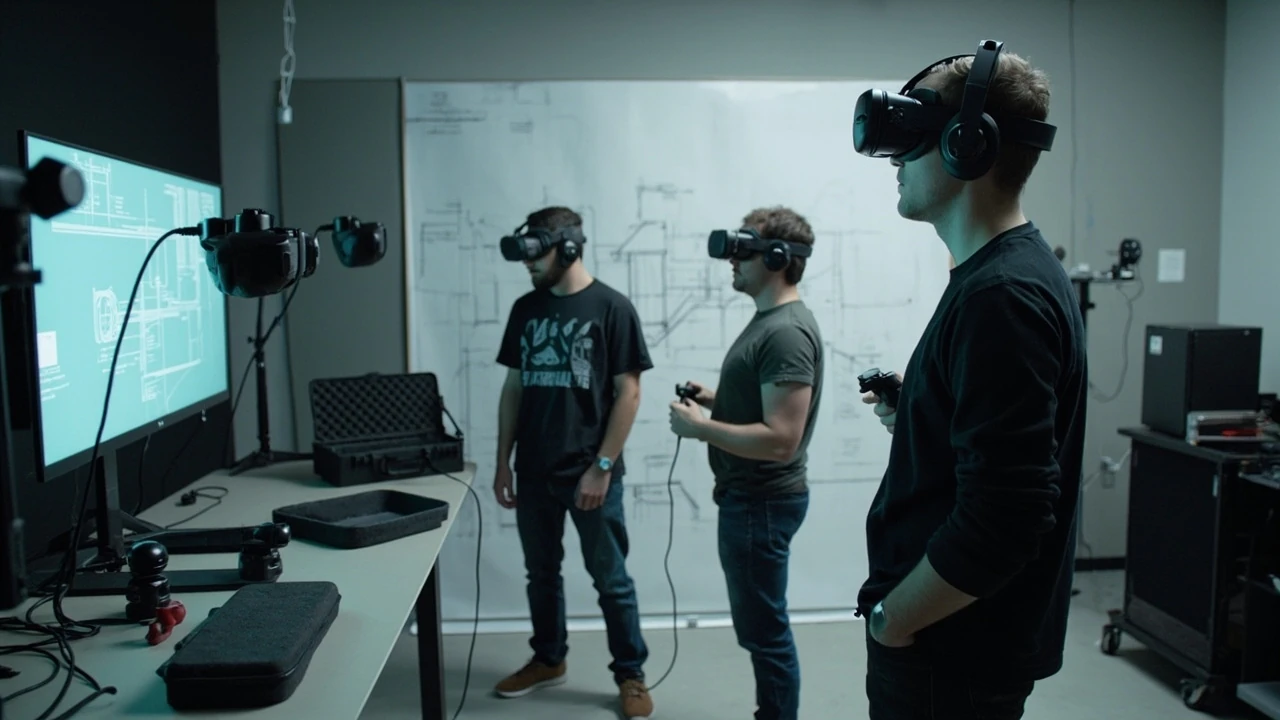
A portfolio can establish relevant experience, but it cannot show how the studio will solve your project’s problems. Ask to see a representative vertical slice, a development build, or a facilitated technical session. The most useful demonstration includes live player movement, object interaction, UI, audio, feedback, and a scene complex enough to reveal performance behavior. A prerecorded capture is useful for visual direction, but it cannot validate tracking stability or frame pacing.
Watch what happens when the player behaves unexpectedly. Can the player collide with a virtual object? Does an item remain in the player’s hand? What happens if tracking is interrupted? Is the interface legible while the player is looking away? Does the application react appropriately when the player exits the play area? These questions test interaction and system design more effectively than a polished lighting sequence.
Ask the team to explain which parts are placeholders, which work on target hardware, and which still depend on a final asset or optimization pass. A trustworthy studio should distinguish an experiment from a production-ready feature. It should also document test conditions, including headset model, runtime version, graphics settings, room configuration, and play session length.
| Prototype test | What to observe | Questions for the supplier |
|---|---|---|
| Natural reach | Whether the player can acquire and use objects without repeated aiming or impossible hand positions | Which interaction states have been tested with the intended controller or hand-tracking method? |
| Locomotion | Whether movement supports the activity and reduces disorientation | Which locomotion methods are implemented, and what are their accessibility limitations? |
| Boundary handling | Whether the player understands the limits of the tracked space | How are guard boundaries represented, and what happens when tracking is lost? |
| Interface use | Whether menus remain readable and usable in a headset | Which interactions work without a controller, keyboard, or external screen? |
| Performance | Whether the build holds its frame-time target during representative activity | What was measured, on which device, and under which scene conditions? |
Check hardware support, compatibility, and platform scope
VR projects are less portable across device families than conventional games because headsets, controllers, tracking systems, runtime versions, and performance limits differ. The contract should identify supported hardware explicitly. “Compatible with VR” is not an acceptance criterion. A useful device matrix states the headset model, platform, runtime, input method, resolution or rendering target, and any unsupported features.
Separate baseline support from stretch goals. Baseline support means the team has tested the core loop on the named device and can reproduce that test during production. Stretch support may include another headset family, a different controller model, or a feature that is not yet available on the target platform. Clearly labeling these categories prevents an untested combination from becoming an implied promise.
Also establish how platform changes will be handled. SDK updates can alter APIs, device behavior, store requirements, or performance characteristics. A studio should say who monitors upstream changes, how often it creates test builds, and whether compatibility work is included in the current milestone. Ask whether the project must target a specific store or device family and whether platform certification is part of the proposed scope.
Measure performance on the real target device
Performance work cannot be separated from the rest of design. Polygon count matters, but so do shading cost, texture memory, draw calls, shader complexity, render scale, simulation work, audio processing, and the number of objects receiving per-frame updates. Two scenes with similar visible complexity can produce different results if their materials, lighting, and update patterns differ.
Require measurements from a representative build running on the target headset or an equivalent constrained device. Record the hardware, runtime, build configuration, scene, activity, and test method. A frame-time graph or a representative performance trace is more useful than a single “smooth” or “optimized” label. Where the team has not tested a target configuration, the report should state that clearly rather than presenting editor performance as a promise.
Frame pacing and response to input also affect comfort. A technically high average frame rate can conceal inconsistent frames that make the headset display feel unstable. Ask how the team captures performance during normal play, including repeated grabs, rapid movement, particle effects, and scene transitions. Stability matters, but the final threshold should reflect the requirements of the chosen hardware rather than a generic benchmark.
Assess the production workflow and asset pipeline
VR scenes often place unusual demands on art, animation, audio, and technical art. Artists may need to create assets for both first-person and third-person views, interactive objects require animation states tied to physical manipulation, and audio may need to support spatial interaction as well as conventional playback. A production plan should show how these disciplines exchange files and how changes are reviewed.
Ask about naming, directory structure, source-control branches, asset metadata, and the approval process for external files. The pipeline must preserve reusable source assets as well as engine-ready versions. If the team uses purchased or generated assets, clarify their licensing and whether the client may use them in the final product, marketing, sequels, or ports.
A small-team example can be found in the site’s feature on Campfire Games and its small-studio approach. While that article is not itself a VR procurement guide, it provides relevant context for judging whether a compact studio has a defined creative process and manageable scope. A small team should not be penalized for being small. It should be penalized if the contract requires capabilities that its confirmed staffing cannot cover.
Clarify ownership, delivery, and acceptance criteria
The commercial agreement should describe what the client receives, not merely what the vendor will “make.” Identify source code, engine projects, art source files, animation sources, audio masters, SDK or plugin licenses, documentation, test builds, and build instructions. Define which assets are original, licensed, or supplied by the client. If a third-party asset cannot be transferred or reused outside the final product, that restriction should be visible before contract signature.
Milestones should end with reviewable decisions rather than vague activity reports. A prototype milestone might require a playable interaction test on named hardware, a documented performance baseline, and a written backlog of known issues. A content milestone might require a specified number of environments, interaction states, audio events, and validation passes. Payment should connect to these outputs, while allowing the client to approve or reject work against stated criteria.
Define what happens when the product changes. A new headset, a revised interaction model, or a large content expansion can affect cost and schedule. The change process should state how the team estimates the impact, who approves it, and which baseline it updates. Silence on these points often creates conflict later, when one party assumes a revision is included and the other treats it as new scope.
- Project brief with the player, activity, device, room setup, and session goal.
- Device and platform matrix covering baseline and stretch support.
- Prototype acceptance criteria based on a playable build on target hardware.
- Performance report with device, configuration, workload, and measured results.
- Milestone plan naming outputs, reviewers, dependencies, and approval deadlines.
- Asset and intellectual-property schedule showing ownership and licensing limits.
- Support period, defect severity definitions, and escalation contacts.
- Acceptance process for the final build and production documentation.
Compare delivery models by risk, control, and capability
There are three common ways to obtain VR development capacity. An external studio owns delivery while the client provides direction and review. A blended team combines client staff with a specialist partner. A fully internal team places all relevant responsibilities under the client’s management. None is inherently superior. The useful comparison is how each model distributes risk, control, communication, and specialist access.
For a first title, an external studio may offer broader VR experience and a more defined production process. Internal development offers greater day-to-day control and institutional knowledge, but recruitment and tool costs can be substantial. A blended team can place engine, interaction, optimization, and headset testing with specialists while the client retains product direction, art direction, and live operations. The chosen model should reflect the project’s risk profile, not the vendor’s preferred staffing model.
| Delivery model | Best fit | Primary advantage | Primary risk |
|---|---|---|---|
| External VR studio | A defined project with a clear device, milestone, and approval process | Access to established VR production knowledge | Dependence on communication, reviews, and vendor capacity |
| Blended team | A client with product ownership that needs specific technical support | Control and specialist capacity can be combined | Ownership boundaries can blur across teams |
| Internal team | A long-term product strategy with sustained work and clear internal leadership | Direct control of design, code, and production priorities | Slow hiring, limited VR knowledge, and higher fixed overhead |
Use reference checks to test delivery behavior
A reference call should explore how the supplier handled a difficult decision, not whether the client liked the finished game. Ask for a contact connected to the relevant discipline and discuss a specific milestone, rejection, scope change, performance problem, or hardware delay. Confidential details may need to remain private, but the conversation should still reveal whether communication and ownership worked.
Useful questions include:
- What was the hardest technical constraint in the project?
- How did the team change the design after playtesting?
- What remained unfinished when the first milestone ended?
- How were headset compatibility issues prioritized?
- How often did the client receive a playable build?
- Which decision required written approval?
- How did the team document the final handoff?
Cross-check the answers with the proposed contract and project plan. References are evidence about working behavior, not a substitute for a technical evaluation or legal review. A company may have performed well on one title while its current staffing, leadership, or capacity has changed. Ask which team would actually handle the work.
Approve a proof of value before full production
If the interaction model, target device, or performance assumptions remain uncertain, begin with a paid proof of value. Keep its scope narrow enough to finish, but include the conditions that could invalidate the larger project. For example, a prototype may need to test a repeated grasping mechanic, a locomotion method, a room-scale interaction, or a performance-heavy environment on the intended headset.
The prototype plan should define the question it answers. “Build a VR prototype” is not sufficient. A stronger brief asks the team to determine whether a player can complete a 10-minute activity comfortably on the selected device, reach all essential objects without breaking immersion, and maintain the chosen frame-time target under a representative load. Define pass, revise, and stop conditions before work begins.
Require a short handoff after the prototype. It should contain the test procedure, build used, device configuration, recorded results, known limitations, and recommendation. Decide in advance whether the same team will continue if the result is positive. This keeps a prototype from becoming a ceremonial step disconnected from the actual delivery team.
Frequently asked questions
How much VR experience should a development company have?
The company should have demonstrable experience with the target engine, headset family, interaction method, and performance constraints of your project. General game-development experience can help, but it does not establish competence with room-scale boundaries, stereo rendering, physical input, tracking loss, or headset comfort. A relevant prototype and technical discussion are stronger evidence than a generic VR portfolio.
Should I hire a VR studio or build an internal team?
Use an external studio when the project has a bounded scope and you need established VR production capacity. Use a blended team when internal staff own the product but need specific engine, interaction, optimization, or testing support. Build a full internal team when VR is a long-term strategic product and the organization can support hiring, tooling, and specialist knowledge through multiple releases.
What should a VR prototype include?
It should include the interaction or system that carries the project’s main risk, a representative scene, target-device testing, and measurable acceptance criteria. It may need one complete activity rather than many unfinished features. The prototype should produce evidence about comfort, usability, performance, and production effort that informs the next investment decision.
How do I compare VR companies that provide similar services?
Compare them using the same brief and scorecard. Evaluate relevant device experience, proposed method, team capacity, prototype evidence, performance process, production plan, ownership terms, support model, and communication quality. Do not compare a detailed technical proposal with a generic deck and assume they describe the same engagement.
What is the most important question about headset support?
Ask which exact headset, platform, runtime, and input configuration have been tested, and what remains unsupported. The answer should distinguish a verified build from a planned port or feature. Also ask how the team will respond to SDK updates and newly discovered device-specific issues.
Does a VR game need a larger budget than a conventional game?
Not necessarily, but the budget must account for the selected hardware, interaction design, comfort testing, optimization, and the possibility of maintaining separate device configurations. Scope and team structure matter more than a fixed premium. A small, tightly defined experience can be economical, while a large world with many interactions can create substantial engineering and art costs.
Who should own the VR project’s source assets?
The contract should identify the owner of source code, engine projects, editable art files, animation data, audio masters, documentation, and licensed third-party content. If the client expects to modify, publish, or port the experience after delivery, the agreement must permit that use. A final playable build alone is usually an insufficient handoff.
How should VR performance be tested?
Test a representative build on the actual target device or an equivalent constrained configuration. Record the headset, runtime, graphics settings, scene, activity, and measured frame-time behavior. Testing should include the moments that are most demanding for the design, such as rapid movement, repeated object interaction, particles, audio, and transitions.
What should happen if the prototype reveals a serious comfort problem?
Use the prototype’s acceptance criteria to decide whether to revise the interaction, reduce the scene load, change the locomotion method, or stop the project. A responsible supplier should recommend a technically viable design change rather than treating comfort as a late polish task. The cost and schedule impact should be documented before the next phase begins.