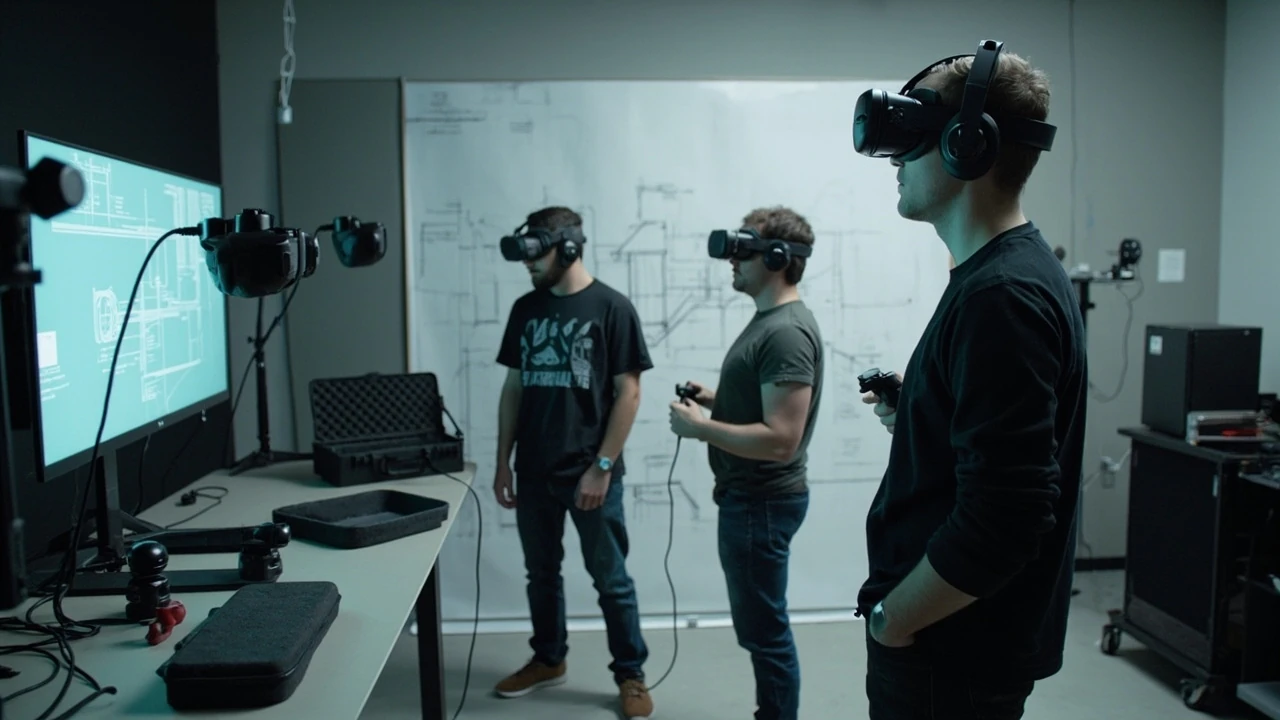
Casino games development: what a production team must decide first
A casino game can look complete long before it is safe to launch. The artwork may be polished, the reels may animate smoothly, and a prototype may retain players in a test group, but the project can still lack a verified math model, a reproducible build process, a clear account-state model, or the test coverage required for real-money use. The first production decision is therefore not which visual theme to imitate. It is which kind of casino product is being built and which regulatory, technical, and operational obligations come with it.
This guide follows casino games development from product definition through certification, release, and live operations. It is aimed at developers, designers, producers, QA leads, and studio owners who need a production framework rather than a catalog of themes. The central principle is that the game, platform, compliance work, payment relationship, and operating model must be planned together. Changing one component can affect the cost, architecture, testing scope, and launch schedule of the others.
A useful early cost review is the casino game development cost guide, which provides useful background for this point. It explains how build model, game type, platform, region, licensing, and live operations affect the budget. Use those categories to frame requirements, but treat quoted ranges as planning estimates rather than fixed prices or vendor guarantees.
Which casino product architecture are you building?
The most useful early distinction is between a self-contained client-side game, a server-backed game, and a live dealer or multiplayer product. The choice determines where game outcomes are calculated, how the client communicates with authoritative services, what must be logged, and how failures are recovered.
Choose the simplest architecture that meets the product and regulatory requirements. A self-contained model may be adequate for certain free-to-play or simulation contexts, while real-money products commonly need stronger account, transaction, audit, and game-state controls. Live formats introduce video infrastructure, operational tooling, latency considerations, and dealer or event-management dependencies that a slot or table-game client does not have.
| Product model | Core technical concern | Testing emphasis | Main operational dependency |
|---|---|---|---|
| Client-side game | Deterministic local logic and tamper resistance | Boundary values, random generation, build reproducibility, save-state handling | Asset delivery and client updates |
| Server-backed game | Authoritative game state and secure sessions | Concurrency, retries, idempotency, state recovery, transaction consistency | Reliable backend operations and observability |
| Multiplayer game | Matchmaking, synchronized state, abuse prevention | Latency scenarios, disconnects, timing boundaries, opponent isolation | Capacity planning and incident response |
| Live dealer product | Video, event input, result publication | Stream interruptions, operator actions, result reconciliation, dealer workflows | Studio operations, devices, monitoring, and vendor coordination |
The architecture should be expressed in a short technical decision record. State which component is authoritative for game outcomes, balances, wagers, round state, and history. Also record how the system behaves when the client disconnects, the server restarts, a payment request times out, or two requests arrive at nearly the same time. These decisions are easier to review before the interface is complete.
A practical sequence for defining the product
- Write the product brief. Identify the target platform, player flow, session length, supported currencies, game rules, content volume, and operating model.
- Classify the regulatory model. Record the intended jurisdiction, whether the game involves real money, and which legal and certification work must be commissioned.
- Choose the authority model. Define which service owns every consequential game and account action.
- Set measurable constraints. Include loading expectations, concurrency assumptions, device coverage, recovery targets, and supported operating procedures.
- Identify external dependencies. List payment providers, identity or age checks, RNG testing, analytics, content delivery, live-studio tools, and third-party services.
- Turn assumptions into a testable backlog. Every requirement should have an observable acceptance condition rather than relying on phrases such as “fast,” “secure,” or “seamless.”
How should game math become an engineering requirement?
Casino game math is not only a balance sheet artifact. It defines outcome frequencies, expected return, volatility, bonus behavior, and the range of player sessions. Those parameters influence engine rules, simulation coverage, analytics, content review, and certification evidence.
The mathematics should be versioned independently from presentation code. Designers need approved parameters, engineering needs a stable interface for evaluating them, and QA needs a way to confirm that the shipped build uses the expected version. A spreadsheet may be appropriate as an authoring source, but it should not remain an untracked file that differs from production configuration.
| Artifact | What it should answer | Production control |
|---|---|---|
| Game rules specification | What constitutes a valid wager, outcome, round, bonus, and settlement? | Versioned, reviewed, and linked to the implementation |
| Math model | How are outcomes distributed, and what return and volatility assumptions apply? | Approved parameters, test vectors, simulation output |
| Random number source | How are random values generated, seeded, and exposed? | Documented interface, isolation, audit trail |
| Return calculation | Does the implemented logic produce the expected result over a defined test sample? | Automated simulations and independent review |
| Certification package | What evidence is required for the intended market? | Traceability from requirement to build and test result |
Keep certification tasks in the same backlog as gameplay features. Math changes, animation changes, and bonus-rule changes may all affect the evidence that must be submitted. Treat the certified configuration as a release artifact, not a claim attached loosely to the project.
For engine selection and project setup, teams can also review best game engines for beginners. The engine is only one decision, though. Its suitability depends on the target device, integration requirements, team skills, deployment model, and whether existing platform services reduce or increase custom engineering work.
How do build models change the ownership of risk?
A custom build gives the studio greater control over the product, codebase, deployment process, and long-term feature roadmap. It also transfers much of the technical, operational, and compliance burden to the studio. A white-label model can reduce the amount of platform work, but it introduces vendor dependencies, configuration limits, revenue-share terms, and less direct control over some systems.
Evaluate a provider against a concrete acceptance checklist. The important question is not whether a demo looks convincing. It is whether the provider can show how balances, wagers, outcomes, and histories remain consistent under failure conditions.
- Source-code ownership: Which repositories, tools, and runtime components belong to the studio?
- Data ownership: Can the operator export player, transaction, and game-history records in a usable format?
- Deployment control: Can releases be promoted through development, testing, and production environments with repeatable checks?
- Operational access: Can the studio monitor services, investigate errors, and coordinate incident response?
- Certification scope: Which components and changes require recertification or a new test submission?
- Commercial terms: Which costs recur, and how do revenue share, minimums, support, and third-party fees combine?
- Exit planning: What would migration to another provider or internal platform require?
Run a pilot that exercises the contract rather than a polished demonstration. Test session restoration, duplicate requests, service interruption, account transfer, a math-model update, and a failed content release. This exposes ownership gaps while the cost of change is still manageable.
What belongs in a casino game architecture?
The core client should present the game, collect permitted input, communicate with the relevant services, and avoid making decisions that require trusted authority. Even when calculations are local, the client must not be the only place where wagers, outcomes, or balances are trusted.
A production architecture diagram should separate responsibilities clearly:
- Presentation: screens, animation, sound, input, accessibility settings, and responsive layout.
- Game client: session negotiation, command construction, display state, error recovery, and telemetry.
- Game service: round state, outcome evaluation, game limits, bonus progression, and authoritative history.
- Wallet or ledger: balance reservations, debits, credits, reversals, and immutable transaction records.
- Identity and access: authentication, session management, permissions, and account recovery.
- Risk controls: limit enforcement, anomaly detection, fraud signals, and operational intervention.
- Data pipeline: event collection, attribution, aggregation, and reporting with access controls.
Define consistency requirements for each action. A display update is not a financial transaction. A recorded wager is not a completed round. A completed round is not necessarily a settled credit if the settlement process can fail. Modeling these states separately prevents retries from duplicating money movement or displaying a result that the ledger did not accept.
Which QA checks matter most before release?
Casino games development requires layered testing because defects can exist in the rules, implementation, interface, backend, data pipeline, and operating process at the same time. Functional tests alone will not cover many of the most expensive failures.
Start with the math model and game rules. For additional context, Use fixed seeds or deterministic test controls where the random-number interface permits them. Compare expected and actual behavior over representative and boundary cases, then run statistical simulations separately. A passing sample is not proof of a correct distribution, and a large simulation is not proof that every exceptional path was implemented correctly.
| Test layer | What to verify | Useful evidence |
|---|---|---|
| Unit and property tests | Individual rules, state transitions, valid ranges, and invariants | Automated test results tied to source revisions |
| Math simulation | Outcome distribution, return, volatility, and rare-event behavior | Parameters, sample design, output, and reviewer sign-off |
| Integration tests | Client, game service, wallet, and event pipeline behavior | Request traces, transaction records, and error handling results |
| Concurrency tests | Multiple sessions, retries, timeouts, and simultaneous requests | Race-condition reports and invariant checks |
| End-to-end tests | Complete player journeys and support workflows | Build-specific test cases and evidence |
| Regression tests | Previously fixed behavior after code, content, or configuration changes | Automated suite output and release sign-off |
A release candidate also needs a traceable build identifier. Record the application version, content bundle, math configuration, service versions, and relevant configuration hashes. If a defect appears in production, the team must be able to identify exactly what was live rather than infer it from deployment dates.
Failure-oriented test scenarios
- Interrupt the client during wager confirmation and verify that the server does not process the same command twice.
- Restart the game service during a bonus round and verify that the restored state matches the authoritative history.
- Submit invalid, duplicated, delayed, and out-of-order commands and check that the state machine rejects or safely handles each one.
- Exceed table, round, or player limits at several points in the flow and confirm consistent enforcement.
- Change a configuration value that affects eligibility and verify that existing sessions behave according to the documented version rule.
- Block analytics delivery and confirm that gameplay and settlement remain available through the intended fallback path.
How should production keep casino content manageable?
Slots, table games, and live formats can multiply content through symbol sets, paytables, bonus modes, localized text, sounds, animations, and rule variations. A reusable content pipeline is therefore more valuable than a collection of manually assembled scene files.
Use a single source of truth for rules and presentation data. Imported or authored values should be validated for type, range, references, and compatibility. A symbol may point to a missing animation, a paytable may reference a disabled state, or a localized string may exceed the interface budget. Catch these issues before they reach a release candidate.
Asset naming should encode meaningful ownership and version information without making the pipeline depend on fragile folder conventions. Include the asset type, stable identifier, locale where relevant, and pipeline variant. Automated checks can then detect duplicates, missing dependencies, oversized files, and unsupported formats.
Content review also needs explicit ownership. Product design should approve the player experience. Gameplay engineering should approve the rules. Art and animation should approve the assets. QA should approve test evidence. Compliance or the relevant qualified reviewer should approve the regulated behavior. A single “content done” flag hides these separate responsibilities and encourages late rework.
How do art, animation, sound, and accessibility affect the build?
Casino presentation must communicate state clearly under real play. Players need to recognize accepted input, pending transactions, wins, losses, bonus steps, and recoverable errors. A visually attractive animation cannot compensate for ambiguous state feedback.
Build motion and audio around the actual game loop. Long celebrations can delay a player’s next decision, while a rapid sequence can make the result difficult to understand. Sound should remain useful when repeated over a long session. If a player disables it, essential information must still be available visually.
Accessibility requirements should enter the prototype rather than arrive as a final compliance pass. Test text scaling, contrast, focus order, screen-reader labels, reduced-motion settings, and non-audio cues. Also check whether animations cause flashing, whether controls are reachable on smaller screens, and whether the interface remains understandable without narration.
Performance testing should use representative devices and production-like content. Measure loading, frame behavior, memory, network traffic, and input latency where each applies. A profiler or telemetry trace is needed before attributing a problem to a particular effect. The relevant question is not whether a game can run on one studio workstation, but whether it meets the agreed experience on the intended device range.
How should telemetry support development and operations?
Telemetry should answer specific questions. Which errors affect real sessions? Which device or browser version is producing repeated failures? How long does a bonus state remain active? Are settlement retries increasing? Which content changes affect abandonment or early exits?
Do not collect every field available merely because it is technically possible. Define the purpose, owner, permitted retention, and access control for each event. A structured event schema is more useful than a collection of loosely formatted screen names, especially when several services contribute to one journey.
Separate diagnostic data from financial records. A UI event may say that a credit animation was shown, while the ledger remains the source for whether money was credited. Analytics dashboards should not attempt to become an unofficial financial ledger.
Also create operational alerts around symptoms that require action, such as elevated round failures, delayed settlement, or abnormal session creation. Every alert needs a severity, ownership path, diagnostic starting point, and action that is safe to take. A dashboard that no one can interpret during an incident adds little operational value.
What must happen between a feature-complete build and launch?
A feature-complete prototype is still a candidate for formal release. The final stage should close evidence gaps and prepare the people who will operate the product.
- Lock the release scope. Define included games, locales, devices, payment paths, limit configurations, and support procedures.
- Complete independent verification. Submit the required game math, random-number implementation, and build for the relevant assessment process.
- Resolve deviations. Record every change made during assessment and re-test affected behavior.
- Run production readiness testing. Exercise deployment, monitoring, backups, recovery, support tools, and key incidents.
- Train operators. Cover known issues, escalation paths, game controls, transaction review, and communication procedures.
- Perform a controlled release. Begin with limited traffic or a controlled cohort, observe agreed indicators, and define a rollback or pause condition.
- Review after launch. Compare real behavior with test expectations and feed findings into the backlog and risk register.
Each step should produce an artifact: a signed scope document, test report, assessment response, readiness checklist, support guide, release record, or incident report. The launch decision should be based on named evidence and unresolved risk, not a calendar date alone.
What does sustainable live operations require?
Launching a casino game creates a long-lived dependency on content, infrastructure, payment services, support, and player-facing communication. Live operations begin when the first real session enters production, even if the next content release is months away.
Define a service ownership matrix. Name the team responsible for game availability, backend reliability, payment issues, content corrections, player support, security response, and release approval. Include supplier contacts where external providers participate. Ownership without an escalation path is just a label.
Use a regular operational rhythm:
- Review availability, latency, error rates, settlement failures, and support themes.
- Investigate trends that indicate a broken rule, confusing interface, exploit path, or technical regression.
- Audit recent configuration, content, and game-math changes against release records.
- Rotate credentials, review privileged access, and confirm backup or restoration procedures.
- Update runbooks after incidents, provider changes, and product releases.
Plan content changes as controlled releases. A visual adjustment may be simple, but changing reel symbols, paytables, bonus conditions, eligibility, or limits can affect game behavior, analytics, certification evidence, and player expectations. Use the same review discipline for small updates and major features.
How can a studio reduce costly rework?
Casino games development becomes more predictable when the team makes risky assumptions visible. The following practices prevent common problems:
- Create one requirements source. Use user stories, rules tables, interface specifications, and acceptance criteria that can be traced to tests.
- Prototype the riskiest mechanism first. Test authoritative state, math evaluation, or live-event reconciliation before polishing the full interface.
- Build compliance into the delivery plan. Reserve time for review, evidence preparation, retesting, and changes after assessment.
- Use representative production data. Test with realistic content volumes, localizations, and concurrency rather than a narrow demo data set.
- Keep vendor boundaries explicit. Document which team owns failures and data at each interface.
- Fund operations before launch. Monitoring, support, maintenance, and content delivery need owners and budget.
The practical next step for a new project is to produce three connected documents: a one-page product and authority model, a math and rules specification, and a staged release plan with explicit evidence. If those documents disagree, the team has not yet resolved the product’s real architecture. Bring the disagreements into design, engineering, QA, compliance, and production reviews before polished assets conceal them.
Frequently asked questions
What is casino games development?
Casino games development is the design, engineering, testing, certification, release, and operation of games governed by gambling rules or casino mechanics. It includes more than slot or card visuals. Teams must manage game math, authoritative state, money movement, compliance evidence, account security, content changes, and live support for each targeted market.
Should a casino game be built in a general-purpose game engine?
Sometimes, but only if the engine and deployment path fit the platform requirements. A general engine can support animation, input, UI, and simulation, but real-money products may also require a controlled service architecture, certified random-number integration, server authority, and release controls. Evaluate the entire operating model rather than choosing an engine from graphics alone.
How many people are needed to develop a casino game?
The team depends on the product model. A small single-title prototype may involve a designer, developer, artist, QA contributor, and producer. A real-money launch also needs security, platform, compliance, payments, operations, and support expertise, whether those people are internal, contracted, or supplied by a provider. Define roles and responsibilities before estimating headcount.
How long does casino game development take?
There is no defensible universal duration. The schedule depends on the number and complexity of games, art volume, live or multiplayer features, platform integration, certification scope, license readiness, and the team’s delivery process. A more credible estimate starts from a scoped vertical slice and adds separate allowances for compliance review, revisions, content production, and production-readiness testing.
What is the difference between a casino game and a casino platform?
A casino game implements a specific set of rules and player interactions. A casino platform manages broader services such as accounts, wallets, game catalogs, provider connections, administration, reporting, and operational controls. A studio can supply one component or a combined platform, but the contracts, dependencies, and ownership boundaries should be explicit.
Are white-label casino games cheaper than custom development?
They can reduce the initial platform-building burden, but the lower upfront cost does not necessarily produce the lower total cost of ownership. White-label arrangements may include recurring platform fees or revenue share, while custom development creates a larger internal maintenance burden. Compare ownership, integrations, support, certification changes, commercial terms, and the cost of leaving the provider.
How do developers test casino game randomness?
Testing combines deterministic rule cases with statistical analysis. Fixed test vectors can verify how the implementation handles known inputs, while simulations can assess distributions, expected return, and volatility. These methods are complementary. Simulation does not replace rule-based testing, and a small deterministic sample does not establish a statistical property.
Can one casino game be released across multiple jurisdictions?
It may share a codebase with jurisdiction-specific builds, but rules, content, limits, tax or reporting handling, and certification requirements can differ. Maintain a clear configuration model and document which configurations have been approved for which market. Do not treat a single successful deployment as evidence that every legal configuration is valid.
What changes after a casino game launches?
Live operation introduces traffic analysis, incident response, support cases, content updates, configuration changes, security reviews, provider dependencies, and regulatory obligations. The team must preserve a traceable build and configuration history, monitor meaningful service indicators, and route changes through controlled release gates. A game is not finished when it first becomes available.
What should a casino game prototype prove first?
Prototype the highest-risk behavior first. Depending on the product, that may be a bonus-state machine, a server-authoritative round, wallet consistency, a live-dealer result pipeline, or a math model implemented without calculation errors. A polished interface is useful for evaluating experience, but it cannot compensate for unresolved state, accounting, or compliance architecture.